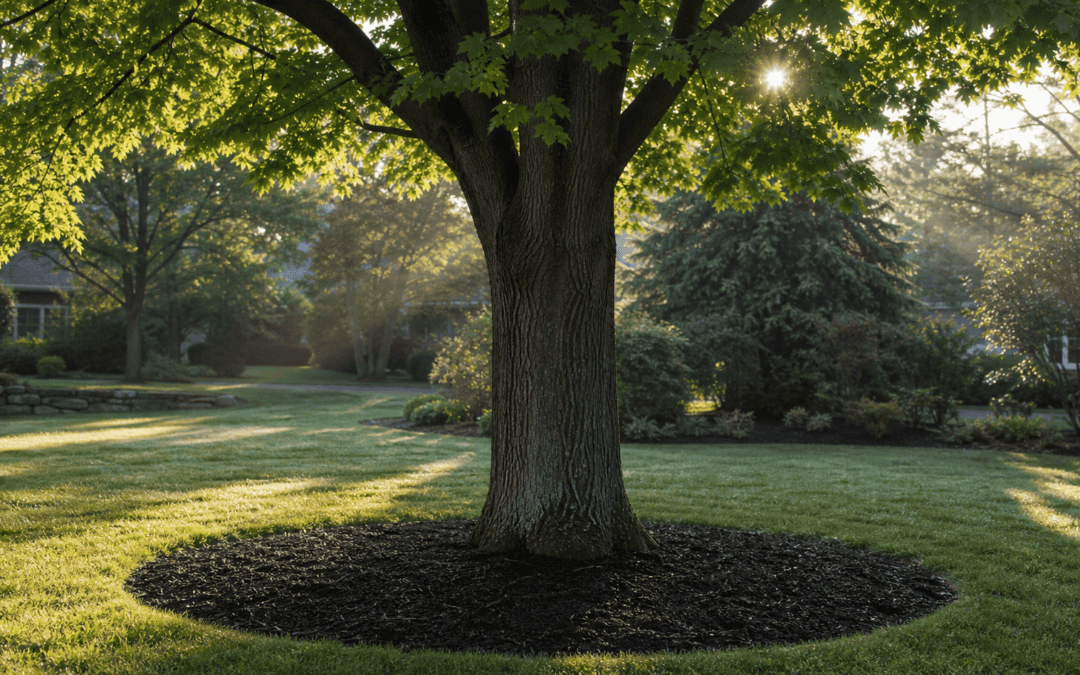
The right way to mulch around trees in New England is a flat 2–4 inch ring of hardwood mulch, pulled back 2–3 inches from the trunk, extending out to the drip line where possible. The wrong way — "volcano mulching" with mulch piled against the trunk — slowly kills mature trees by rotting the bark and inviting pests. This guide covers proper mulching for Massachusetts trees: depth, distance, materials, and timing.
Planning a mulch around trees project on the North Shore? Call (781) 731-5303 or request a free estimate. Most quotes returned within 24 hours.
The Right Mulching Method (Step by Step)
Mulch correctly and a mature tree thrives for decades. Mulch wrong (volcano-style) and you slowly kill a 50-year-old tree. The correct method:
- Pull existing mulch back from the trunk — leave 2–3 inches of bare soil around the base.
- Spread fresh mulch 2–4 inches deep — no more. Deeper layers smother roots and trap moisture against the bark.
- Extend mulch ring to the drip line — the outer edge of the tree's canopy. Where space allows, this is ideal.
- Keep mulch 2–3 inches AWAY from the trunk — never touching the bark. A "donut" not a "volcano."
- Refresh annually — top up to maintain 2–4 inches depth, not stack more on top.
Why Volcano Mulching Kills Trees
Volcano mulching — piling mulch up against the tree trunk in a cone shape — is the most common landscaping mistake we see across the North Shore. It causes:
- Bark rot — mulch traps moisture against the bark, leading to fungal decay.
- Root girdling — roots grow up into the mulch instead of out and down into the soil, eventually wrapping around and choking the tree.
- Pest harborage — voles, mice, and insects nest in the mulch volcano and chew the bark.
- Trunk gas exchange blocked — bark needs air; smothered bark dies.
- Death over 5–15 years — slow decline that's hard to attribute to the mulch when it finally kills the tree.
Best Mulch Types for New England
Material choice matters less than method, but some options are better than others:
- Dark hardwood mulch (shredded) — natural, decomposes slowly, adds organic matter. Best general-purpose choice.
- Pine bark mulch — slightly acidic (good for hydrangeas, rhododendrons, blueberries). Lasts 2–3 years.
- Cedar mulch — natural insect repellent, longer-lasting. More expensive.
- Leaf mulch (composted) — best for soil health. Lower visual contrast.
- SKIP: dyed mulch (red, black) — chemical dye, looks artificial, often made from low-grade wood (pallets, recycled lumber).
- SKIP: stone or rock mulch around trees — heats up, doesn't hold moisture, no soil benefit.
When to Mulch in New England (Timing Matters)
The best mulching window for North Shore MA trees:
- Mid-April to mid-May (primary application) — soil has warmed, frost is past. Refresh after spring cleanup.
- Late October to early November (winter prep) — top up before ground freezes for winter root insulation.
- Avoid summer mulching — applying mulch in July traps heat, stresses trees during drought.
- Avoid winter mulching — applying on frozen ground does nothing; wait for spring thaw.
How Much Mulch You Actually Need
Standard calculation:
- 1 cubic yard covers ~100 square feet at 3 inches deep.
- A 6-foot diameter ring around a tree — about 28 sq ft, needs 1/4 cubic yard.
- A 10-foot diameter ring — about 78 sq ft, needs about 3/4 cubic yard.
- Full drip-line mulching of a 40-foot canopy — about 12 cubic yards. Significant but worth it for tree health.
Frequently Asked Questions
How deep should mulch be around trees?
2 to 4 inches deep. Deeper than 4 inches traps moisture and starts to suffocate roots. Less than 2 inches doesn't hold moisture or suppress weeds effectively. Refresh annually to maintain the right depth — don't just stack more on top.
How far from the trunk should mulch be?
Keep mulch 2 to 3 inches AWAY from the trunk on all sides. Never pile mulch up against the bark. The "mulch donut" (ring with bare soil at center) is correct. The "mulch volcano" (cone piled against trunk) is what slowly kills trees over 5–15 years.
What is the best mulch for trees in New England?
Shredded dark hardwood mulch is the best general choice — decomposes slowly, adds organic matter, holds moisture, suppresses weeds, looks natural. For acid-loving trees (oak, magnolia, rhododendron underplantings), pine bark mulch is a better fit.
Should I remove old mulch before applying new mulch?
Not all of it — if old mulch is at the proper 2–3 inch depth, just refresh the top inch. But if you have 5+ inches of accumulated old mulch (years of stacking without removing), pull most of it back to 2 inches and start fresh. Accumulated mulch buildup is one of the leading causes of mature tree decline.
Get a Free Estimate from AB Mendez Masonry & Landscaping
Planning a project on the North Shore of Massachusetts? AB Mendez Masonry & Landscaping is a Massachusetts-licensed home improvement contractor with over 10 years of experience across Lynn, Salem, Beverly, Peabody, Danvers, Marblehead, Gloucester, Swampscott, Newburyport, and Ipswich. Visit our Landscaping Services services page for materials, process, and pricing — or explore related work: Garden Design, Tree Services, Tree Trimming.
Call (781) 731-5303 or request a free estimate online. Most quotes returned within 24 hours.